Free Music Does Not Exist. The Question Is Who Pays For It.
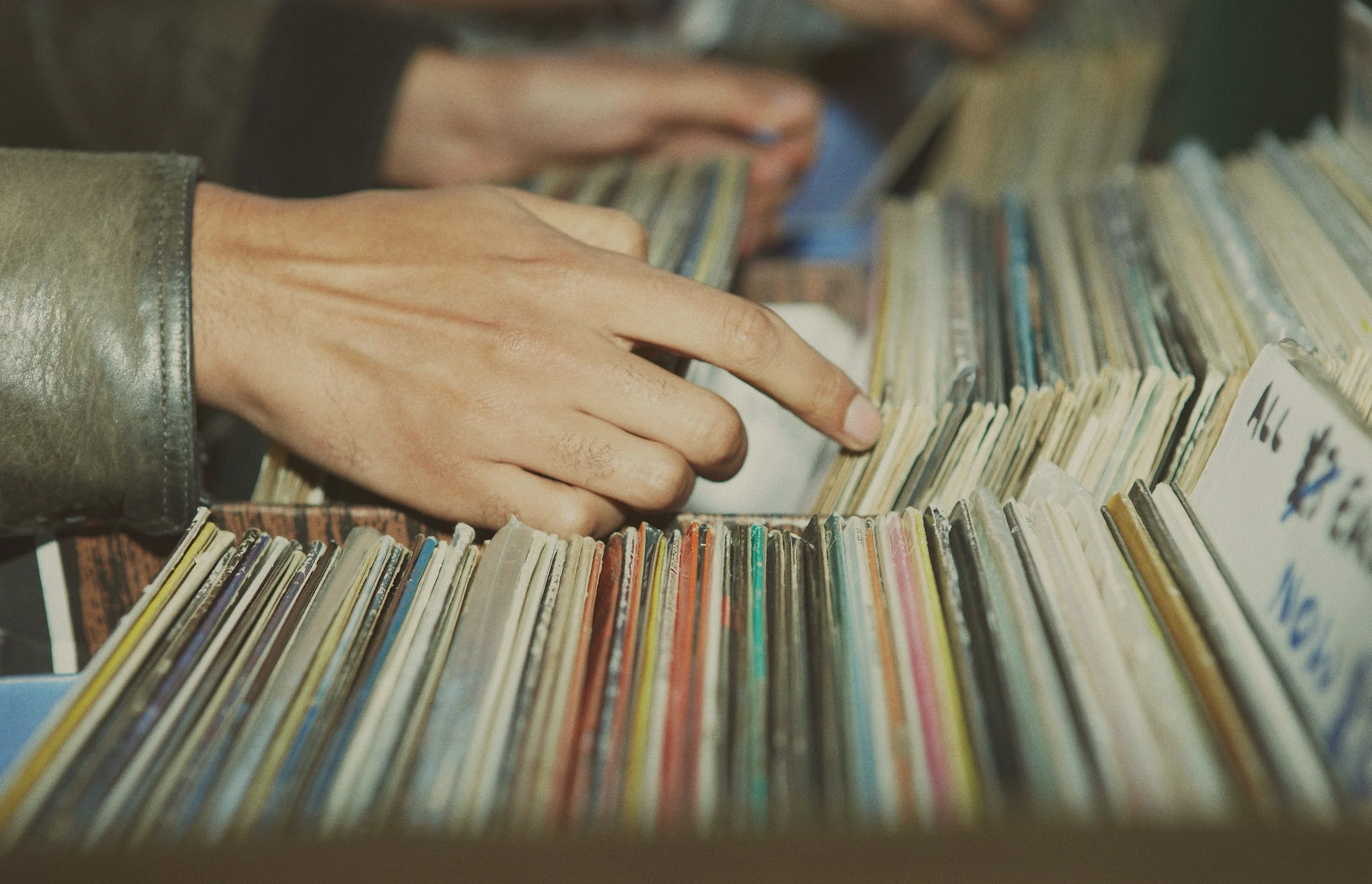
Music, a universal cultural practice
We spend an average of 20.7 hours per week listening to music¹. That is more than the time spent watching TV, reading, or playing sports. Music is with us everywhere: on commutes, at work, in the evening, in the morning. It accompanies the moments that matter and those we forget the next day. Today, 73% of internet users worldwide listen to music via streaming services². It is a massive, almost universal practice. And yet, a simple question is rarely asked: how much is it worth, and who pays for it to exist?
How streaming changed our relationship with value
For a long time, listening to music came with a visible cost. You bought a record, a cassette, a CD. Every purchase was a conscious act: you chose an album, you paid for it, and it was yours. The value of music was tangible, literally in your hands.
Digital technology changed that, first through piracy, which profoundly weakened the music industry in the 2000s. Single paid downloads reintroduced legal online music purchases. Streaming then brought a change of scale: legal, instant access to millions of tracks, often for free. The latter played a major role in transforming the market. It brought millions of listeners back to legal listening and democratized access to music on an unprecedented scale. Today, there are 837 million paying music subscribers worldwide², proof that streaming has proven its worth. But a large share of this listening remains free.
Streaming also established something more permanent: the idea of music available on demand, where the actual cost becomes almost invisible. Unlimited access has become the norm. Today, 73% of internet users streaming music, but only 9 to 10% of the world's population has a paid subscription³. Music is everywhere. The question is how much it costs, and for whom – and and how much it earns, and to whom.
What each stream really earns
Behind every track are artists, musicians, producers, sound engineers, and teams who dedicate time, work, and resources to its creation. Music seems intangible when it reaches our headphones. Its creation is not.
To understand what happens in practice, we have to look at how the model works. Streaming platforms pay out around 70% of their revenues to labels and publishers, who then redistribute them to artists according to their contracts. What the platform generates per listener therefore directly determines what reaches creators at the end of the chain.
Yet what each listener brings to a platform varies considerably depending on the model. On a platform that combines free accounts and paid subscriptions, this revenue per listener averages US$20.74 per year⁴. On an exclusively paid platform, with no free accounts to dilute this figure, it reaches US$135.90⁵—or 6.5 times more. This gap is not the result of better commercial performance, but the direct consequence of a choice of model: when every user contributes financially, every stream generates more value.
Concretely, 1,000 streams on a premium paid platform represent an average of US$18.73 paid back to artists and rights holders, a decision that strengthens the entire music ecosystem.
And there exists an even more direct model which was available pre-streaming: à la carte purchases. When an album is purchased as a download, revenues are not pooled across all streams in the market. They are directly associated with that specific work and that artist. Streaming and purchasing are not mutually exclusive. One promotes discovery, the other expresses direct support.
Paying is not a sacrifice but a choice
Music occupies a unique place in our lives. It accompanies memories, defines eras, and brings together people who do not know each other. The model chosen to listen to it is not a minor detail. It has concrete consequences for artists, producers, engineers, and the musical diversity existent in our world. Paying for music is not a sacrifice. It is a recognition that music has value, and that this value deserves to be honored.
Music accompanies us every day. Perhaps the question is not whether it has value, but whether we take that into account.
Behind every stream, there is a choice. And that choice has a concrete impact on how music will be created, produced, and discovered tomorrow. Qobuz made its choice when it was founded in 2007: an exclusively paid model, with no advertising, designed so that the value of music truly benefits those who create it.
¹ IFPI – Engaging with Music, 2023
² IFPI – Global Music Report, 2026
³ IFPI 2025 / Statista 2025
⁴ IFPI 2026, 2025 market figures
⁵ Qobuz data, fiscal year 2025 – royalty rate verified by an independent firm